
What Skipping This Costs You
Put this off until January and the bill usually isn't a tune-up anymore. It's a torsion spring that snaps at 15 degrees and traps your car inside on a work morning. It's an opener that won't budge because the battery backup died overnight during an ice storm. It's a bottom seal that's hardened and cracked, letting cold air pour into an attached garage and spike your heating costs for the rest of the season. A $150-$300 fall tune-up is a lot cheaper than an emergency spring replacement or a service call at 6 a.m. in freezing rain, and it's a lot less stressful than standing in your driveway trying to pry a stuck door open before work.
Why Winter Is Harder on a Garage Door Than Any Other Season Here
Oldham County doesn't do mild transitions. You go from humid, 90-degree summers to hard freezes and road salt in a matter of weeks, and that swing is rough on every moving part of a garage door system. Steel contracts in the cold, rubber seals stiffen and crack, and salt brine from treated roads gets flung up into tracks and hardware, where it speeds up corrosion. A door that worked fine through a humid August can start sticking, grinding, or sagging once temperatures drop and stay down.
Springs Get More Brittle, Not Just More Strained
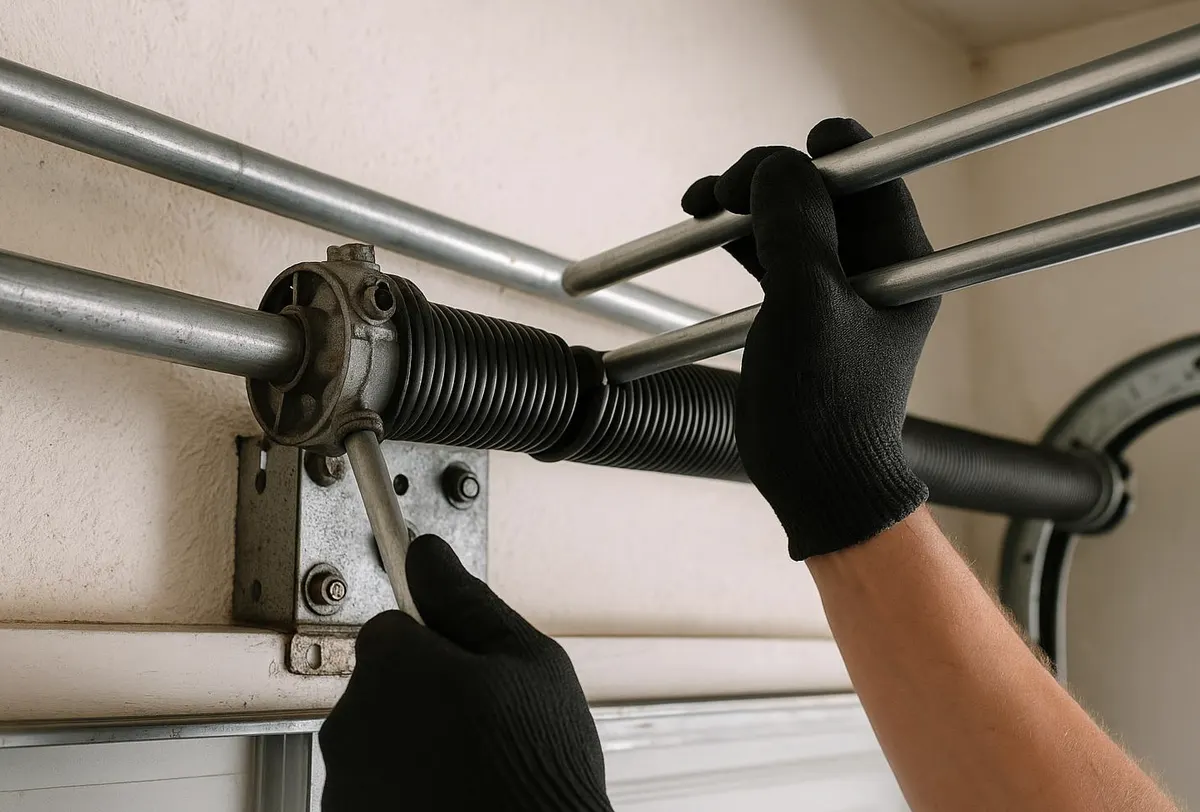
Torsion and extension springs are under constant tension year-round, but cold makes the metal less forgiving. A spring that was already fatigued from a full season of summer heat cycling is far more likely to fail once winter stress is added on top. If your spring looks stretched, has visible gaps between coils, or the door has felt heavier to lift by hand lately, that's a sign it's near the end of its life — and springs are not a DIY repair. The tension stored in them can cause serious injury if they let go while someone's working on them.
Weatherstripping and Bottom Seals
The rubber seal along the bottom of the door and the weatherstripping around the frame are your main defense against cold air, moisture, and the occasional field mouse looking for shelter. Rubber loses flexibility in freezing temperatures, and if it's already cracked or flattened from UV exposure over the summer, winter will finish the job. A failed seal lets in drafts, lets snowmelt pool under the door, and in bad cases can let the door freeze to the slab overnight.
Tracks, Rollers, and Hardware
Road salt and de-icing grit get kicked up by tires and blown around by wind, and some of it ends up in your garage door tracks. Combined with cold-thickened old grease, that grit causes grinding, uneven rolling, and extra wear on rollers and hinges. A fresh application of a garage-door-specific lithium-based lubricant on rollers, hinges, and the torsion bar — not WD-40, which is a cleaner, not a lubricant — makes a real difference in how the door moves once temperatures drop.
Opener and Battery Backup
Cold weather reduces battery capacity, which matters most if your opener has a battery backup for power outages — exactly the situation you're likely to face during an ice storm that also knocks out power lines. Test the backup now, not during the outage. Also check that photoelectric safety sensors near the floor are clean and properly aligned; fall leaves, holiday decorations, and stored items tend to accumulate near them this time of year and can cause a door that reverses for no obvious reason.
Do the Balance Test
With the opener disconnected (pull the manual release cord), lift the door by hand to about waist height and let go. A properly balanced door should stay roughly in place. If it drops like a stone or shoots upward, the spring tension is off, and that's a job for a technician, not a weekend project.
A Pre-Winter Checklist You Can Actually Do This Month
- Inspect the bottom seal and frame weatherstripping for cracks, flattening, or gaps; replace if it's hardened or torn.
- Lubricate rollers, hinges, and the torsion bar with a lithium-based garage door lubricant.
- Clear debris and road grit out of the tracks with a damp cloth, then dry thoroughly before lubricating.
- Test the battery backup on your opener, and replace the battery if it's more than two to three years old.
- Clean photoelectric sensor lenses and confirm they're aligned (solid light, not blinking).
- Do a manual balance test and note anything that feels off.
- Tighten visible hardware — bolts, brackets, and track fasteners loosen with seasonal temperature swings.
When It's Time to Call Crestwood Garage Door Service
If your balance test fails, if a spring shows visible wear, or if the door is grinding, hesitating, or reversing unpredictably, that's your cue to call rather than keep adjusting things yourself. Our Garage Door Maintenance visits cover the full inspection — springs, cables, rollers, seals, and opener settings — so small issues get caught before a cold snap turns them into a stuck door. If a spring has already failed or is clearly close to it, our Spring Replacement service gets the right-weight spring installed correctly and safely, with the door rebalanced before we leave.
If you're anywhere from Crestwood to La Grange, Pewee Valley, Buckner, Goshen, Prospect, or Smithfield and you want your garage door ready before the first real freeze hits Oldham County, give Crestwood Garage Door Service a call. We'll check it over, explain exactly what we find, and get it handled right the first time.